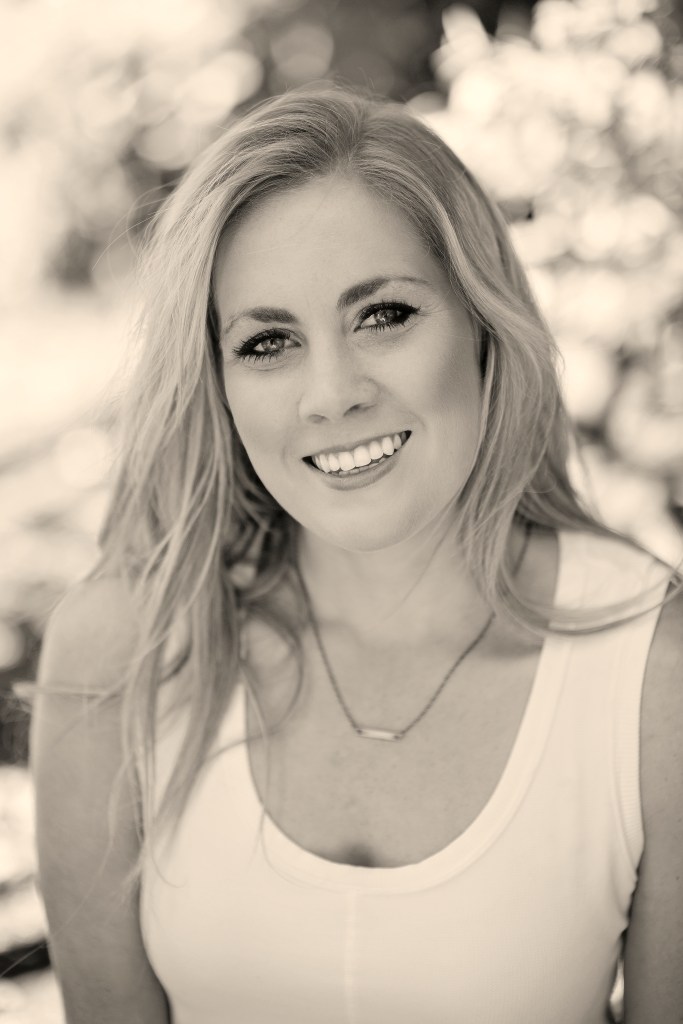
I am passionate about bringing people together who love to learn about themselves and grow their relationships.
I deeply enjoy studying and discussing the Enneagram. And while I am no expert, I find great fulfillment through facilitating group conversations using the Enneagram (and other personality/awareness tools) as a guide.
I try to laugh every day. One sure-fire way to make sure this happens is taking my puppy to play chase with the “big dogs” at a local Seattle dog park.
The best thing I’ve done so in the past few month is focus being present with my self and my body (a shift in focus from my status quo of trying to stay busy and “productive”). Sometimes, that’s meant I go slower and get less done than my Ego tries to tell me I “should”.
What’s your story? I’d love to hear from you.


What is “Enneagram Understandings”?
Enneagram Understandings is a community and a conversation.
The goal? To understand our self and others through the lens of the Enneagram. Conversation may look a little different right now, but that doesn’t make it any less important.
Together with teaching, tools and conversation, we will build new understandings. Understandings that change minds, change relationships and change lives.
We host conversations focused on understanding our self, our relationships, and the Enneagram. Truly amazing things can happen when we meet, share, and learn through our shared experiences and shared humanity.
The Enneagram is a tool — among many great tools — that provides a roadmap to get where we’re going.
Through conversation, we’ll unlock new ways of seeing within our own personality and tap into deeper understanding of those who are similar (and different) from us.
Understanding our self and others helps us:
- Lead more productive lives (at work, at home, and in our relationships)
- Take better care of our self and others
- Cope with stress and manage conflict
- Create more space for compassion and empathy in our lives
- And so much more
Whether you are new to the Enneagram or years into the work, I hope you’ll consider joining this community and these conversations. Every person and personality is welcome, wanted, and important at this table.
The backstory
I first heard the word “Enneagram” in 2018 from a friend during a weekly ritual involving wine, truffle popcorn and decompressing from long days at Amazon. Having taken a test and finding her Enneagram number, she was excited to share what she learned and then what she thought my number might be.
“I think you are probably a Seven, Two, or Nine,” she said.
New to the tool — with little idea how to pronounce, or spell, this strange new word — I did the only thing that felt natural at the time: I assumed these numbers must be on a scale and Nine was the highest.
“Oh yeah,” I thought to myself. “I must be a Nine.”
So, I took a test. But I found the results to be confusing and unclear. It seemed, at first, no different than understanding a Myers-Briggs type. I believed what I wanted to believe about myself. I’d read the seemingly positive personality traits of the number my Enneagram test suggested I was: things like “diplomatic”, “charming”, and “strategic” and think to myself “yeah, so?”. Almost everyone in my life could be described using those same characteristics. I pushed back on the tool for a while chalking it up to be like every other system out there: useful as a self-awareness check-in but nothing more.
Then I discovered “The Road Back to You” podcast by Ian Cron and Suzanne Stabile. That’s when everything changed. Hearing first hand testimonies of real-life humans figuring out themselves and their relationships and using this tool to do it was enough to get me hooked. I had to know more.
Curious? Give it a listen: “Discover the Enneagram: Episode One”
I spent the next couple years studying the Enneagram and working to applying it in all the corners of my life. The results were amazing (and humbling).
The Enneagram helps us:
- Discover language and tools to understand our self and improve relationships with the people we love
- Grow awareness of our routined, patterned responses to life and discover some that were unproductive or unhelpful
- Allow room for weakness by helping us see that these imperfections are not only human, but that there are others who share these struggles and blindspots.
- Gain new appreciation and understanding of perspectives that may be different from our own.
What’s the Enneagram
And why should you care?
The Enneagram teaches there are 9 ways of seeing. Each of those 9 ways is referred to as a “type structure”. We tend to gravitate to one structure more often than others. This gravitational pull helps us determine our “core number”. Our number helps us understand that influences that shape our motivations, attitudes, and behaviors. No one number will define us entirely nor will everything about a number fit our own unique experience. The Enneagram offers a personality scaffolding to help us explore our inner-world and personal experiences. When we walk the road of understanding our self, we begin the journey of understanding others.
Imagine for a second a conversation you had recently with someone who is important to you. Now, imagine the last you and this person didn’t see eye to eye. Maybe it was related to an important task that you felt differently about how it should be done? Maybe it was about a troubling relationship with someone else that you had differing viewpoints on? Whatever the case, consider about how the conversation went and how you felt during it. Did you understand them? Did it feel like they understood you? Were there misinterpretations of actions or words? Did feelings get overlooked or reduced? How successful were both of you at listening? If things had played out differently, would the outcomes have improved?
Moments of misunderstanding or disconnect — perhaps like the one you are thinking about right now — are a part of what makes us human. The other part of what makes us human? Our capacity to learn and grow. And our propensity to understand.
One of the most helpful ways to begin to understand ourselves and others more completely is by recognizing that we all see the world very differently. And while that lesson feels pretty commonly understood and accepted, the Enneagram allows a platform for exploration that goes far deeper.
As Helen Palmer puts it, “Each of us can be telling the truth, yet each of us can have a different story to tell… It stirs compassion to see through the eyes of others and to feel the pressure of emotional life, because when you take on other’s outlook, their perspective is right.”
Want to learn more about how the Enneagram works?
Read more at The Enneagram Institute
Whether you are new to the Enneagram or years into the work, I hope you’ll consider joining in. Every person and personality is important at this table.
When is the next conversation?
In times like these, it’s challenging to plan for the future. It’s also hard to know when “safe” and “normal” will return. This reality has made organizing events challenging.
That said, can you think of a more appropriate moment than right now for us to have conversations around growing our understanding of others?
Visit the “Events” calendar to RSVP for our next conversation. In the meantime, I’d love to hear from you:
- What are you needing right now from conversation?
- Have you had any misunderstanding during the past few months?
- Have you been observing changed behaviors (in yourself or others)?
- How have you been coping with this season of uncertainty and change?
Whatever you are experiencing right now… you are not alone (promise).
Look forward to conversation and togetherness again soon.
Until then…
Be well, friends.
Are you on Meetup? Hey, so are we! Join us?
 Enneagram Understandings